




What Do the Parameters on Power Capacitor Nameplates Represent?
 Dec 18, 2025|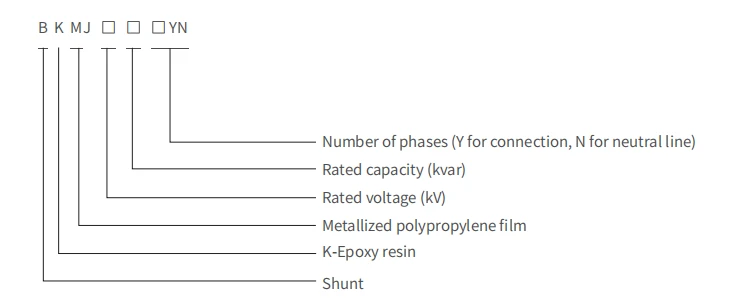
Rated Voltage (V): Un is the voltage (RMS) applied between the two terminals of the capacitor during its design. For electronic capacitors, the unit of rated voltage is typically V, while for power capacitors, it is commonly expressed in kV.
Rated Current (A): In is the alternating current (RMS) specified during the design of the capacitor, with the unit being A.
Rated Capacity (kvar): Qn represents the reactive power output by the capacitor under rated voltage and frequency. It serves as the pricing unit for power capacitors.
Rated Capacitance (μF): C is the capacitance value adopted during the design of the capacitor, indicating its ability to store electric charge (μF).
Rated Frequency (50/60 Hz): F is the operating frequency for which the capacitor is designed, applicable to either single-phase or three-phase systems (3/1).
Temperature Class (°C): Common minimum temperature values include: +5°C, -5°C, -25°C, -40°C, and -50°C. Common maximum temperature values include: +40°C (Class A), +45°C (Class B), +50°C (Class C), and +50°C (Class D), totaling four classes.
Capacitance Tolerance: For capacitor units and banks rated ≤100 kvar: -5% to +15%; for those rated >100 kvar: 0 to +10%. The maximum capacitance difference between different phases must not exceed 1.08.
Discharge Resistor: For low-voltage capacitors, after power-off, the voltage should drop from √2Un to below 75V within 3 minutes. For high-voltage capacitors, after power-off, the voltage should drop from √2Un to below 75V within 10 minutes.
Compliance Standards:IEC 60831-1/60831-2 2014