Cable Terminal


Your Professional Cable Terminal Supplier

Hubei Haneng Electric Power Technology Co., Ltd is the branch company of Jinneng joint with North China Electric Power University, and is committed to developing cable accessories that meet the needs of power construction, and is a leader in new energy electrical materials. Products mainly cover:

1.110KV-220kV crosslinked cable outdoor porcelain sleeve terminal, silicone rubber composite sleeve terminal, GIS terminal, intermediate joint, grounding protection device.

2.66-110kV silicone rubber fully prefabricated cable terminal and intermediate connector,

3.1-35kV cold shrink, heat shrink, prefabrication, pouring, wrapping, porcelain sleeve and other indoor and outdoor cable terminal and intermediate joint, direct insertion arrester and other electrical products.

Laboratory:

High-performance Insulation Materials Research Laboratory & Smart Distribution Network Products Laboratory.

Research base:

Build a new high-voltage insulating materials laboratory research practice base together with North China electric power university

Business partners:

State Grid, China Southern Power Grid, China Energy Engineering Group, China Nuclear Photovoltaic, China Railway Group, Hong Kong Metro, China National Petroleum Corporation, China Petroleum & Chemical Corporation, China Railway, Tianneng Battery, Siemens, etc.

R&D team:


A powerful R&D team led by 3 professors and experts, consisting of 28 engineers

our certificates
Jinneng has 44 patents for core components, intelligent capacitors, and supporting products, including 4 invention patents and 11 software copyrights, and has been recognized as a national high-tech enterprise. Certificates including ISO9001, ISO14001, OHS18001, CCC, CQC, CE, TUV and other certifications High-tech enterprises, specialized new small and medium-sized enterprises, innovative enterprises, science and technology enterprises.
ISO45001
ISO45001
ISO9001
ISO 9001:2015
ISO14001
ISO14001
productcate-531-751
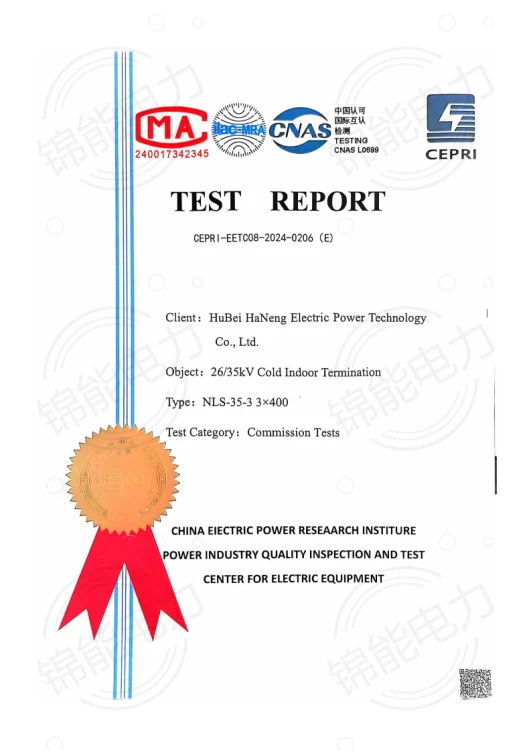
Test Report


 We are experts at this industry

 Jinneng build a new high-voltage insulating materials laboratory   research practice base together with North China electric power   university


North China electric power university

Professor/Dr YanFeng (intelligent distribution network product research and development room)

Professor/Dr YanFeng, insulation materials experts, senior engineer, north China electric power university graduate student tutor. Responsible for the technical R&D of 35-110kV cable accessory series products.

Chen Junxiang(intelligent distribution network product research and development room)

Chief engineer, embedded software experts, senior engineer;

Wang Ting: Expert in communication software, senior engineer, and holds a master's degree from the United States.

Professor Xue Zhiyong(highly efficient insulation materials research and development room)

Highly efficient insulation materials research and development room, a professor and doctoral supervisor at North China electric power university, the chief scientist of the key research project of the 14th Five-Year Plan of the State.


  Types of Cable Terminal:

  1. Classified by external insulating materials:
 •  Porcelain sleeve type outdoor terminal: use porcelain sleeves as                outer insulating material, it has excellent anti-pollution and anti-aging          performance.

  • Composite sleeve outdoor terminal: It adopts glass fiber reinforced epoxy tubes as the core lining and is covered with weather-resistant elastic materials such as silicone rubber on the outside.


  2. Classification by internal insulation technology:

  • Prefabricated rubber stress cone terminal:The electric field distribution is controlled by prefabricated rubber stress cones, which is suitable for high-voltage cables ranging from 110kV to 500kV. 
  • Silicone oil-impregnated film capacitor cone terminal: By using the uniform electric field of the capacitor cone structure, it is mainly applied in ultra-high voltage systems of 330kV and above, and has stronger resistance to operating shock and lightning shock.


  3. Special design types:

  • Dry terminal: No liquid filling, relying on the cable's own insulation for support. 
  • Composite insulated oil-filled terminal: Combining silicone rubber stress cones and oil-filled design, it meets the environmental requirements of high pollution level (Class IV) and is suitable for 64/110kV systems.


Applications of Cable Terminal


220kV Composite Bushing Outdoor Terminal

 01

New energy power generation and transmission projects

  • Offshore/onshore wind power
  • Photovoltaic and energy storage systems

02

Extreme geographical and climatic conditions

  • High-altitude area
  • Cold and hot and humid regions


03

Industry and Urban Infrastructure

  • Petrochemicals and mining areas
  • Rail transit and tunnels
  • Urban underground power transmission

04

High-voltage and ultra-high-voltage transmission systems

  • Ultra-high voltage power grid (110kV and above)
  • 750kV ultra-high voltage system


Frequently Asked Questions


What kind of cable outdoor terminals have?

+

-

  • 66~110kV Dry Pluggable GIS Termination
  • 220kV Dry Plug GIS GIS Terminal
  • 220kV Composite Bushing Outdoor Terminal
  • 220kV Porcelain Bushing Outdoor Cable Jointing Kit
  • 66~110KV Prefabricated Dry Outdoor Cable Termination
  • 66~110kV Outdoor Composite Porcelain Insulator Terminal
  • 66~110KV Porcelain Sleeve Type Outdoor Terminal

What are the main differences between heat shrink terminals and cold shrink terminals?

+

-

The main differences between heat shrink terminals and cold shrink terminals include installation methods, materials and application scenarios.

What materials are used for heat shrink terminals and cold shrink terminals respectively?

+

-

Heat shrinkable terminals typically use heat shrinkable XLPE (Cross-linked polyethylene), our cold shrinkable terminals mainly employ high-performance liquid silicone rubber material.

What are the temperature resistance ranges of heat shrinkage and cold shrinkage terminals respectively?

+

-

Generally speaking, the temperature resistance range of heat shrink terminals is from -40°C to 125°C, while cold shrink terminals is generally from -30°C to 90°C.

What will happen if the temperature exceeds the tolerance range?

+

-

  • Heat shrink terminal

The material ages, deforms or loses its insulating performance.
It may cause a short circuit or malfunction of the cable.

  • Cold shrink terminal

The material becomes brittle, cracks or loses elasticity.
It causes water infiltration and increases the risk of malfunction.


As one of the most professional cable terminal manufacturers and suppliers in China, we're featured by quality products and good service. Please rest assured to wholesale customized cable terminal made in China here from our factory.

disconnect connector, cable termination kit, gis cable termination

(0/10)

clearall