




Application of Lightning Arresters and Surge Protective Devices
 Mar 27, 2026|
 Although both lightning arresters and surge protective devices (SPDs) can protect electrical equipment, they differ significantly in performance and application principles.
Lightning arresters mainly protect electrical equipment from damage caused by lightning strikes or overvoltages by controlling the duration and magnitude of follow current, and they can effectively limit both the time and amplitude of follow current. They are also commonly referred to as overvoltage protectors or overvoltage limiters in practical engineering.
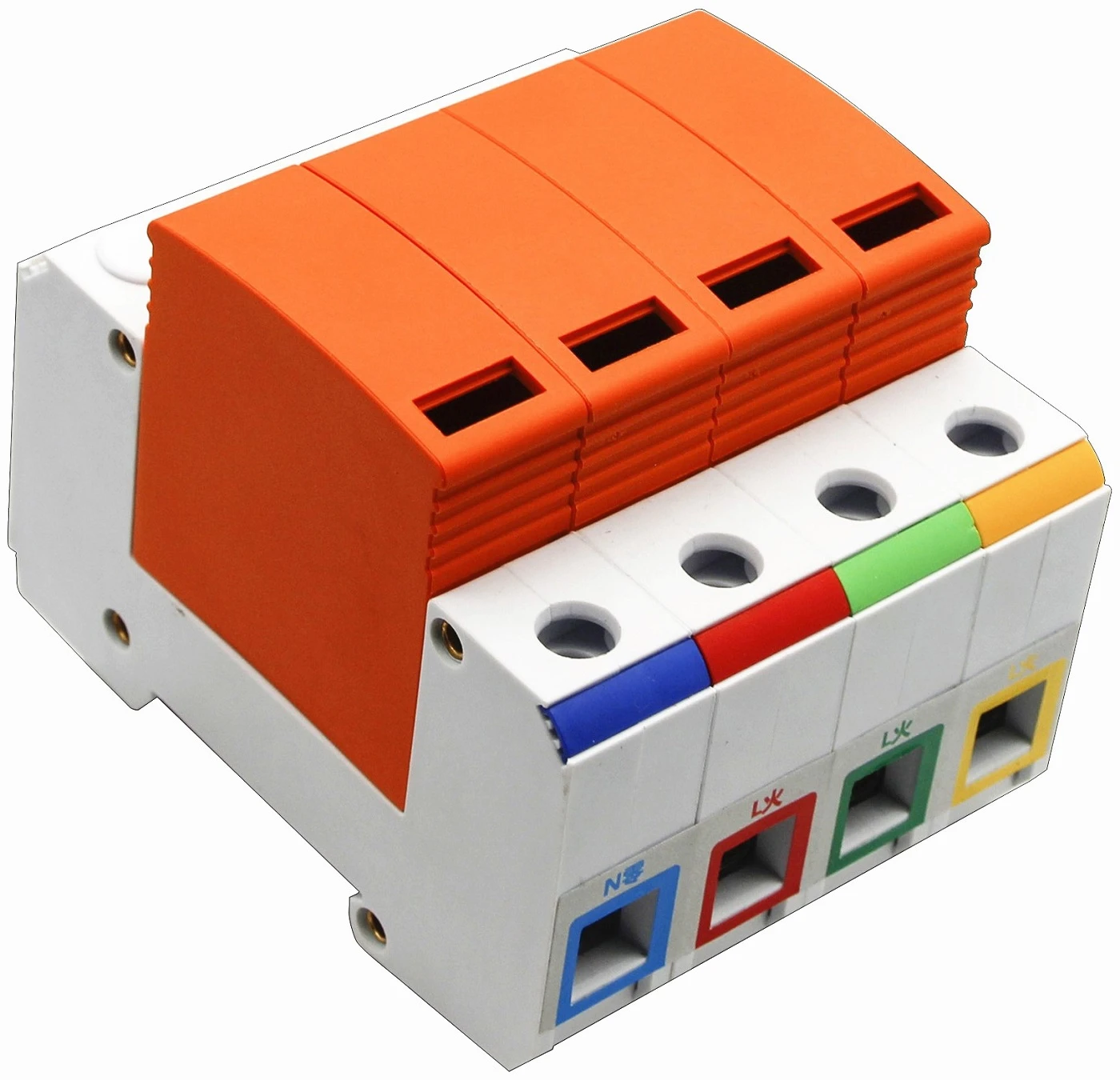
As for surge protective devices, their core function is to absorb high-energy sudden surges in circuits, preventing equipment from being impacted by surge voltages. Better known as lightning protectors, they are specialized electronic devices designed to safeguard electronic equipment, instruments, meters, and communication lines.
These two types of protective devices vary greatly in both working principles and applicable scenarios, yet both are essential protective components in electrical systems. A common question among practitioners is: what exactly are the differences between lightning arresters for lightning overvoltage protection and surge protective devices (SPDs)?
(1) Different applicable voltage ranges
Lightning arresters are applicable to a wide range of voltage levels, from low voltage of 0.4 kV to ultra-high voltage of 500 kV, featuring an extensive application scope. In contrast, Surge Protective Devices (SPDs) are generally used in voltage environments below 1 kV, providing overvoltage protection for low-voltage occasions.
(2) Different protected objects
Lightning arresters are mainly designed to protect large electrical equipment. SPDs, however, usually offer protection for secondary signal circuits or terminal power supply small circuits such as electronic instruments and meters.
(3) Differences in insulation and withstand voltage levels
Electrical equipment and electronic equipment differ greatly in their tolerable voltage levels. Therefore, the residual voltage generated by overvoltage protection devices shall match the withstand voltage level of the protected objects.
(4) Different installation positions
Lightning arresters are generally installed on the primary system, mainly to block lightning surges and prevent them from directly invading overhead lines and electrical equipment to cause damage, so they are often mounted at incoming line positions. Most SPDs are installed on the secondary system, providing supplementary protection after lightning surges are partially or incompletely blocked by lightning arresters. Hence, SPDs are commonly arranged at terminal outgoing lines, signal circuits and other locations.

(5) Different discharge current capacities
Lightning arresters are dedicated to protecting against lightning overvoltage, so they boast a large discharge current capacity. Electronic equipment has much lower insulation levels compared with ordinary electrical equipment, which requires SPDs to cope with lightning overvoltage and switching overvoltage. Nevertheless, SPDs are mostly installed at the terminal and not directly connected to overhead lines; the lightning current reaching the SPD is reduced after current limiting by the previous stage. Thus, SPDs do not need a large discharge current capacity, and the key is to control the residual voltage effectively.
(6) Other significant differences
Lightning arresters and SPDs also differ greatly in aspects such as insulation level and key concerned parameters.
(7) Characteristics and advantages of Surge Protective Devices
SPDs are particularly suitable for refined protection of low-voltage power supply systems. SPDs of different specifications can be selected according to different AC or DC power supplies. If the terminal equipment is far away from the previous-stage SPD, the circuit is prone to oscillating overvoltage or induced overvoltage. Installing SPDs near terminal equipment for precise power protection and coordinating them with the front-stage SPDs can achieve an optimal protection effect.
(8) Different main materials
Lightning arresters are mostly made of zinc oxide, belonging to metal oxide varistors (MOVs). The main materials of SPDs are relatively complex, varying with surge resistance levels and graded protection (in accordance with IEC 6132 standard). In terms of design, SPDs are far more sophisticated than ordinary lightning protection devices.
(9) Technical performance gaps
From a technical perspective, lightning arresters are inferior to SPDs in terms of response time, voltage limiting effect, comprehensive protection capability and aging resistance.
our company have many kinds of lightning arresters,European-style rear lightning arrester,10~35kV Shielded pluggable lightning arrester,are widely use in switchgear,RMU,power substation.
For more info,pls contact us