




Understanding Reactive Power Compensation: How Capacitor Cabinets Boost Energy Efficiency
 Jun 16, 2026|
 In modern industrial power systems, reactive power compensation (also known as power factor correction) is essential for reducing power loss, boosting supply efficiency, and optimizing the electrical environment.
Because the vast majority of industrial machinery consists of inductive loads, connecting capacitive loads (capacitors) in parallel allows facilities to counteract energy waste and stabilize their power grids.
Here is a breakdown of how reactive power compensation works and why it matters for your facility.
1. The Physics of AC Circuits: Leading vs. Lagging Phases
Alternating current (AC) is defined by its phase angles. In an AC circuit:
cause the current phase to lead by 90 degrees.
- Inductors cause the current phase to lag by 90 degrees.
When capacitors and inductors operate within the same circuit, their opposing phases complement each other. This natural balancing act stabilizes power quality, improves supply efficiency, and significantly cuts electricity losses.
2. The "Reservoir" Metaphor: How Capacitor Cabinets Act as Buffers
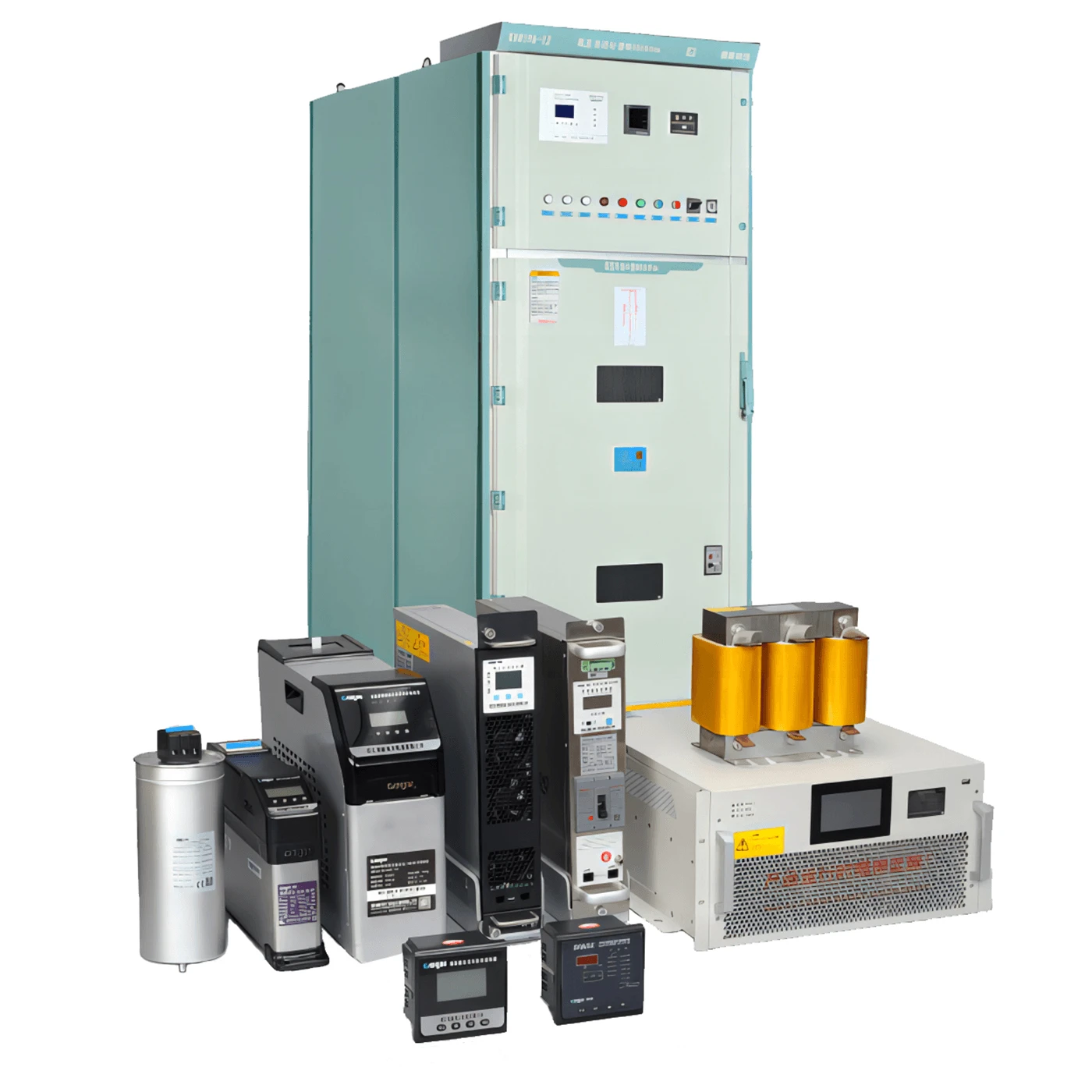
Most industrial enterprises are equipped with dedicated transformer rooms and power distribution networks. These systems consist of main cabinets, branch cabinets, and capacitor cabinets
working in tandem.
Capacitor cabinets are connected in parallel to the AC circuit output terminals alongside all other loads. When the main distribution cabinet is powered on, the capacitors charge first. Once fully charged, they discharge as needed.
The Reservoir Analogy: Think of a capacitor cabinet as a water reservoir. Just as a reservoir captures upstream floodwater and releases it smoothly downstream, a capacitor cabinet acts as an electrical buffer, smoothing out energy spikes and dips.
3. Smoothing Out AC Current Fluctuations
Standard alternating current fluctuates in both direction and magnitude, following a sine wave 50 times per second (50 Hz).
Enterprises with heavy power distribution needs to consume massive volumes of electricity, which naturally triggers drastic current fluctuations. Capacitor cabinets bear the brunt of these rapid shifts. Through their inherent, rapid charging and discharging cycles, they deliver a vital buffering effect that protects the broader electrical system.
4. Active vs. Reactive Power: Maximizing Your Power Factor
All power-consuming devices are collectively referred to as loads, which generally fall into two categories:
- Inductive Loads: Devices with internal windings-such as electric motors, generators, welding machines, and transformers.
- Capacitive Loads: Devices that store energy in an electric field, such as capacitors
Electrical equipment consumes electricity to convert electrical energy into kinetic, thermal, or mechanical energy. This work is split into active power (usable work) and reactive power (non-working power used to sustain magnetic fields).
Why Compensation is Crucial
Every load suffers from inherent self-loss, but inductive loads generate significantly higher reactive power loss. The greater the reactive power loss, the more electricity is wasted, resulting in a poor power factor and potential utility penalties.
By introducing capacitive loads, the capacitive reactive current directly offsets the inductive reactive power loss. Installing capacitor compensation devices in power distribution rooms provides vital power factor correction, eliminates energy waste, and ensures your facility operates at peak efficiency.
Summary of Benefits
- Reduced Energy Bills: Lower reactive power means a higher power factor, eliminating utility surcharge penalties.
- Enhanced Equipment Lifespan: Reduced voltage fluctuations prevent premature wear and tear on industrial motors and transformers.
- Optimized Grid Capacity: Frees up system capacity, allowing your existing infrastructure to handle more actual load.