




Can the 2-50th harmonic be managed by using an APF (Active Power Filter)?
 Aug 20, 2025|
In the face of the complex wide-band harmonic pollution in modern power systems, the filtering capabilities of APF (Active Power Filter) have become the focus of attention in the industry. In the following, we will systematically analyze the filtering effect and optimization scheme of APF on harmonics ranging from 2 to 50 cycles from the perspective of technical principles to practical applications.
I. Analysis of Basic Governance Capabilities
The standard APF can effectively manage 2 to 25 harmonic frequencies, with the compensation rate generally reaching over 90%. For high-frequency harmonics above 25 cycles, due to the limitation of switching frequency, the conventional APF's management effect will gradually decline. The APF using SiC devices can extend the effective management frequency range to 50 cycles, reducing the switching loss by more than 40%.
II. High-frequency Harmonic Control Technology
To manage 50th harmonic frequency (2500Hz), a minimum switching frequency of 12kHz is required. It is recommended to use a three-level topology structure. By employing parallel resonant suppression technology, the high-frequency harmonics can be prevented from being amplified during the treatment process. The design of the digital filter needs to optimize the group delay characteristics to avoid phase distortion in the high-frequency range. In practical engineering, the efficiency of 50th harmonic treatment usually remains within the range of 75% to 85%.
III. Hybrid Filtering Scheme
The "APF + passive filter" hybrid system is an economical and efficient solution. The passive filter handles the 5/7/11 and other characteristic sub-harmonics, while the APF focuses on managing high-frequency and inter-harmonics. This solution can keep the overall THDv of the system within 3%, and the investment cost is 30% lower than that of a pure active solution. The key is to optimize impedance matching and prevent the parallel resonance point from shifting.
IV. Optimization of Control Algorithms
The improved harmonic detection algorithm should have the following features: fast FFT operation (<1ms), adaptive filtering function, and weighted processing of high-frequency components. It is recommended to adopt the sliding window DFT algorithm, with a frequency resolution of up to 1Hz. For rapidly changing harmonics, the predictive control mode can be enabled to compensate for the delay effect. Special attention should be paid to the sampling accuracy in the high-frequency band; it is recommended to use ADC chips with 16 bits or higher.
V. Typical Application Scenarios
When the power harmonics of the data center governance server occur, the compensation rate for the 23/25 high-frequency components is greater than 80%. For photovoltaic power stations dealing with inverter switching harmonics (~35 times), special output filters need to be configured. Medical imaging equipment requires the suppression of ultra-high frequency interference above 45 times, and dedicated APFs with a switching frequency of ≥ 20 kHz need to be selected.
VI. Equipment Selection Suggestions
For the management of broadband harmonics, the following criteria should be met: the switching frequency should be ≥ 16kHz, the junction temperature margin of the IGBT module should be > 30%, and the cutoff frequency of the output filter should be ≥ 5kHz. Pay attention to the indicators in the high-frequency range, such as the attenuation rate of 40-50th harmonics should be > 15dB. The system should have a spectrum analysis function and be able to automatically identify the advantageous harmonic frequency bands.
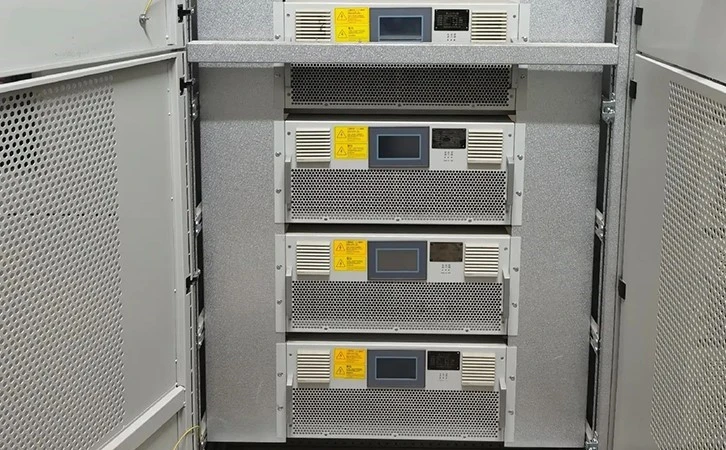
The APF's treatment of harmonics ranging from 2 to 50 exhibits the characteristics of "low-frequency efficiency and gradual improvement at high frequencies". For precise applications with a THD requirement of less than 5%, a multi-stage filtering solution is recommended. During operation, current sensors should be calibrated regularly. If the deviation in high-frequency treatment exceeds 10%, parameter adjustment is necessary.