




Low-Voltage Self-Healing Shunt Capacitors: Technology, Structure & Applications
 Aug 08, 2026|
 Low-voltage Self-healing shunt capacitors (also known as metallized film capacitors) are core components used in low-voltage power distribution systems for reactive power compensation, power factor correction (PFC), voltage stabilization, and line loss reduction.
Equipped with dynamic self-repair capabilities, these units have fully superseded legacy paper-insulated, oil-impregnated, and aluminum foil capacitors across modern power grids.
1. Self-Healing Principle and Operating Mechanism
A low-voltage self-healing shunt capacitor uses single-layer polypropylene (PP) film as its dielectric, coated with a vacuum-deposited, ultra-thin metal layer that functions as the conductive electrode.
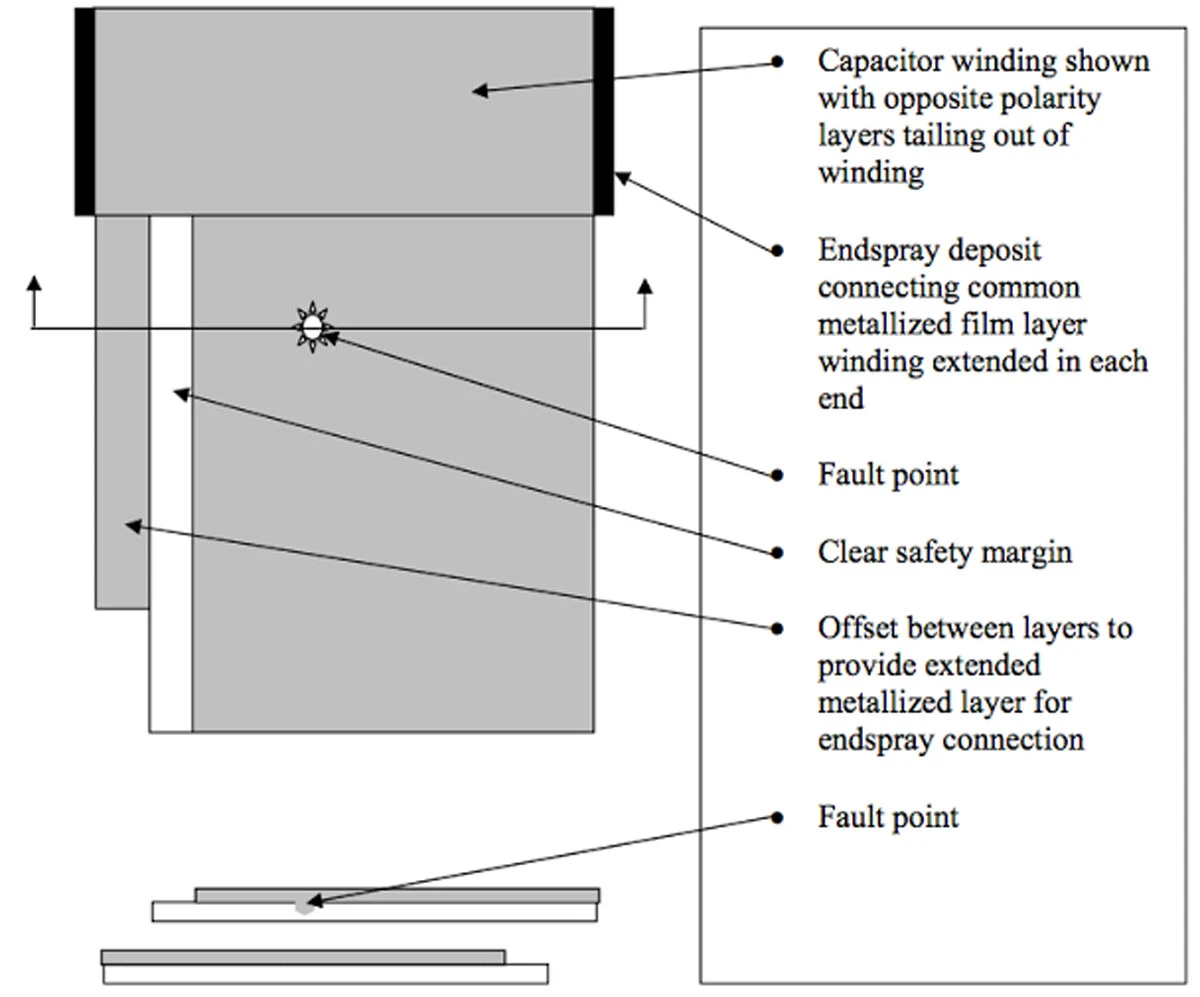
How the Self-Healing Process Works
Breakdown Initiation: When localized overvoltage or dielectric weak spots cause an internal breakdown, a conductive arc forms within microseconds.
Rapid Vaporization: The arc triggers a spike in local current density and temperature. This intense thermal energy instantly vaporizes the micro-scale metallized electrode layer directly surrounding the fault site.
Isolation & Recovery: The vaporized metal expands outward, extinguishing the electric arc and leaving a small, non-conductive, circular insulating zone around the breakdown point.
- Normal Operation Resumes: The dielectric insulation is restored in microseconds without causing a permanent short-circuit.
- Core Value: Dielectric breakdown does not lead to catastrophic component failure. The capacitor continues normal operation with virtually no interruption, significantly boosting operational reliability and service life.
2. Internal Structure & Core Materials
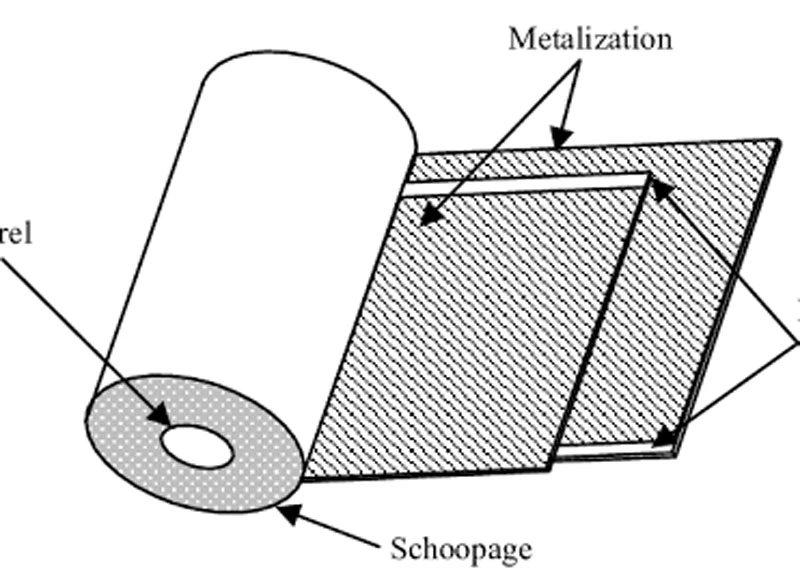
- Dielectric: Single-layer metallized polypropylene (PP) film offering high dielectric strength and ultra-low dielectric loss (tan delta ≤ 0.001).
- Electrodes: Vacuum-evaporated nano-scale aluminum or zinc-aluminum (Zn-Al) alloy layer coating the film surface.
- Winding Construction: Non-inductive winding with end-face zinc-tin alloy flame spraying (schoopage) for terminal connections. Multiple windings are connected in series and parallel to form complete capacitor units.
Integrated 3-Tier Safety System
- Internal Discharge Resistors: Mandated by safety standards, built-in discharge resistors reduce residual voltage from √2Un to ≤ 50V within 3 minutes of power disconnection, preventing reclosing impacts and protecting maintenance technicians.
- Over-pressure Disconnector (Explosion-Proof Mechanism): Internal gas generation caused by severe overheating causes top-cover deformation, physically breaking internal connect wires to permanently isolate the capacitor before bulging, fire, or explosion can occur.
- Internal Fuses (Select Models): Dedicated element fuses isolate internal winding faults, preventing a single failure from disabling the entire capacitor.
Protective Outer Enclosure
Available in rectangular cold-rolled steel casings or cylindrical aluminum cans with fully sealed construction, offered in dry-type (resin-encapsulated) or oil-impregnated (vegetable/silicone oil) configurations.
3. Key Performance Characteristics
- Self-Healing Dielectric: Automatically isolates internal breakdown points and restores insulation resistance instantly.
- Multi-Layer Safety Configuration: Combines internal discharge resistors, overpressure disconnectors, and optional individual element fuses for complete bursting and fire protection.
- Dry-Type Leakage-Free Design: Thermosetting resin encapsulation prevents liquid leaks, eliminating environmental contamination risks.
- Compact & Lightweight Build: Space-saving footprint allows easy installation in power factor correction (APFC) panels and switchgear cabinets.
- High Inrush Current Withstanding: Capable of withstanding surge currents exceeding 300 times rated current.
4. Market Trends & Industry Applications
Growing Global Demand
Driven by global power quality regulations, industrial electrification, and harmonic mitigation requirements, the market for self-healing power capacitors continues steady expansion within the global power transmission and distribution sector.
Smart Grid & Intelligent Capacitors
Modern power factor correction systems increasingly adopt smart capacitors featuring integrated microprocessors and real-time condition monitoring (temperature, current, and capacitance degradation). These enable remote telemetry, predictive maintenance, and seamless integration with smart grid infrastructures.
Environmentally Friendly Dry-Type Solutions
Eco-friendly dry-type self-healing capacitors are quickly becoming the industry standard. Featuring zero oil pollution risks, modern dry capacitors achieve rated voltages above 900 V and single-unit capacities reaching 100 kvar.
Emerging Clean Energy Applications
Beyond traditional low-voltage distribution networks, self-healing capacitors are critical components in renewable energy systems, electric vehicle (EV) charging infrastructure, and energy storage system (ESS) power conversion installations.