




APF Cabinet Solution for Harmonic Suppression
 May 21, 2026|
 1. Project Background
With the increasing use of inverters, LED lighting systems, variable frequency drives (VFDs), UPS systems, and other power electronic equipment inside industrial parks and commercial facilities, harmonic pollution in the power distribution network has become increasingly serious.
Power utility inspections revealed that the harmonic distortion levels in several power distribution rooms exceeded the allowable limits specified by electric energy metering systems. To improve power quality and ensure safe system operation, an Active Power Filter (APF) cabinet was installed for harmonic suppression and reactive power compensation.
2. Understanding Harmonics in Power Systems
2.1 Fundamental Wave and Harmonics
In standard power systems, the fundamental frequency of voltage and current in China is 50Hz. However, most modern electrical loads are non-linear loads, such as:
- Frequency converters
- Inverters
- LED drivers
- UPS systems
- Battery charging equipment
- Industrial automation devices
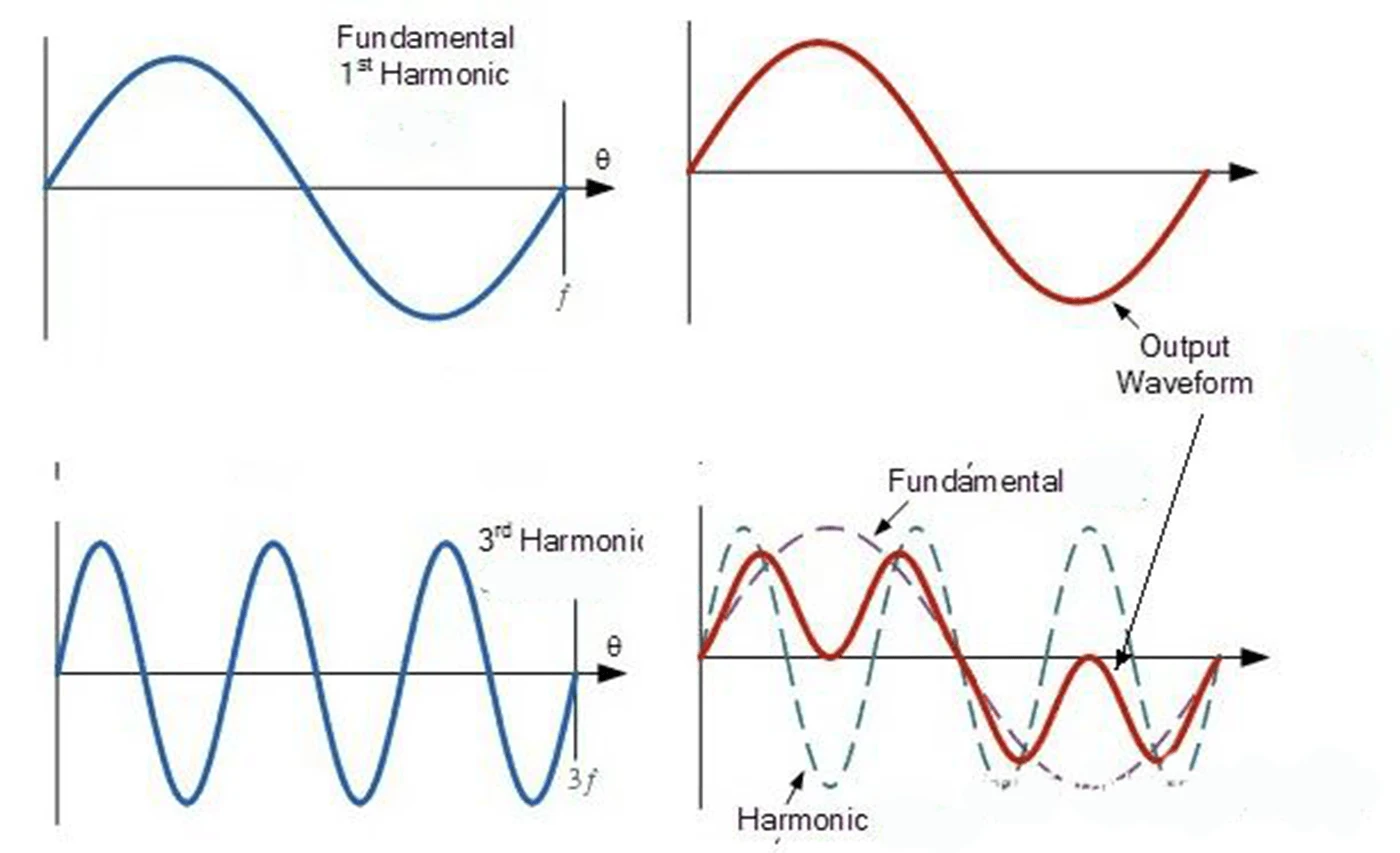
These devices generate current and voltage components with frequencies that are integer multiples of the fundamental frequency (for example, 150Hz, 250Hz, and 350Hz). These unwanted frequency components are known as harmonics.
Harmonics distort the standard sinusoidal waveform of the power system and negatively affect overall power quality.
2.2 Hazards of Harmonics
Excessive harmonics can cause serious problems in electrical systems, including:
- Increased power loss in cables and transformers
- Overheating of electrical equipment
- Accelerated insulation aging
- Reduced service life of capacitors and motors
- Malfunction of sensitive electronic devices
- Reduced power factor
- Higher energy consumption
- False tripping of protection devices
- Long-term operation under severe harmonic conditions may lead to permanent damage to electrical equipment and reduced system reliability.
According to the national standard GB/T 14549-1993 - Power Quality: Harmonics in Public Power Grid, the allowable total harmonic distortion (THD) limits in China are:
0.38kV low-voltage system: THD ≤ 5.0%
6kV–10kV medium-voltage system: THD ≤ 4.0%
3. Active Power Filter (APF) Cabinet
3.1 Difference Between Active and Passive Power Filters
Active Power Filter (APF)
An Active Power Filter uses semiconductor devices and intelligent control technology to monitor harmonics in real time. It automatically generates reverse compensation currents to dynamically eliminate harmonic currents in the power grid.
Compared with traditional filtering methods, APF systems offer:
- Real-time harmonic compensation
- Dynamic response
- Automatic adjustment
- Multi-harmonic suppression capability
- Reactive power compensation support
Passive Power Filter
A Passive Power Filter mainly consists of capacitors, reactors, and LC filter circuits, similar to conventional reactive power compensation cabinets.
Passive power filters can only suppress harmonics of specific frequencies and have several limitations:
- Fixed compensation characteristics
- Risk of resonance
- Limited filtering range
- Poor adaptability to changing load conditions
Therefore, APF cabinets are widely preferred in modern power quality management systems.
3.2 Functional Features of APF Cabinet
Wide Harmonic Filtering Range
- Effectively suppresses harmonics from the 2nd to the 61st order
- Adjustable harmonic filtering targets
- Supports customized harmonic compensation strategies
Real-Time Intelligent Compensation
- Dynamically tracks load changes
- Automatically outputs reverse compensation current
- Maintains stable power quality continuously
RS485 Communication Interface
- Supports remote monitoring and data transmission
- Compatible with intelligent power management systems
- Convenient for centralized operation and maintenance
Reactive Power Compensation Function
- Performs harmonic filtering independently without causing reactive power over-compensation
- Utilizes remaining capacity for reactive power compensation
- Improves system power factor through dynamic filtering
Improving Power Quality and System Reliability
- Reduces equipment overheating
- Extends service life of electrical devices
- Lowers line losses and energy consumption
- Enhances overall power distribution safety
Conclusion
As harmonic pollution becomes increasingly common in modern industrial and commercial power systems, Active Power Filter (APF) cabinets have become an essential solution for harmonic suppression and power quality improvement.
Compared with traditional passive filters, APF systems provide wider harmonic filtering ranges, faster response speeds, intelligent compensation, and integrated reactive power compensation functions, making them ideal for:
- Industrial plants
- Commercial buildings
- Data centers
- Hospitals
- Smart manufacturing facilities
- Renewable energy systems
By effectively reducing harmonic distortion and improving power factor, APF cabinets help ensure safer, more stable, and more energy-efficient power system operation