




Differences Between Switchgear Cabinet and Distribution Cabinet
 Apr 16, 2026|
 The core difference between switchgear cabinets and distribution cabinets lies in their functional positioning and voltage levels.Switchgear cabinets serve as hubs for control and protection, focusing on "circuit breaking, closing and isolation";Distribution cabinets serve as power distribution & supply terminals, focusing on power branching and end-user circuit protection.
|
Dimension |
Switchgear Cabinet |
Distribution Cabinet |
|
Core Function |
Control circuit connection & disconnection, isolate faults, ensure system safety; act as the main power center and primary power distribution device |
Distribute power to secondary circuits and terminal loads, and provide basic protection against overload, short circuit and other faults |
|
Voltage Level |
Mainly high voltage (3.6–40.5kV), also available in low-voltage |
Mainly low voltage (≤1000V) |
|
Typical Components |
Circuit breaker, disconnector, earthing switch, transformer, relay protection device, mostly metal enclosed structure |
Circuit breaker, fuse, contactor, instruments; connected via copper bars or wires, floor-standing or wall-mounted |
|
Application Scenarios |
Substations, power distribution rooms, power plants |
Factory workshops, commercial buildings, residential and other terminal power consumption areas |
|
Size & Protection |
Large size (height: 1.8–2.2m+), high protection level (mostly IP40 and above) |
Flexible size (compact wall-mounted type available), Medium protection grade(IP30–IP54 in general) |
Detailed Analysis of Key Differences
Functional Positioning:A switchgear cabinet is the "main switch" of the power system. It is responsible for connecting/disconnecting high-voltage and critical circuits, isolating equipment for maintenance, and cutting off faulty circuits rapidly to prevent accident escalation.A distribution cabinet works as a "power divider", which distributes power from the upper power supply to each branch circuit, focusing on terminal power supply and basic circuit protection.
Structure & Components:Switchgear cabinets feature high integration with compartmentalized internal design (busbar compartment, circuit breaker compartment, etc.). Internal components are designed to withstand high current and large short-circuit current, equipped with comprehensive protection functions.Distribution cabinets adopt a relatively simple structure with modular components, enabling easy expansion and routine maintenance.
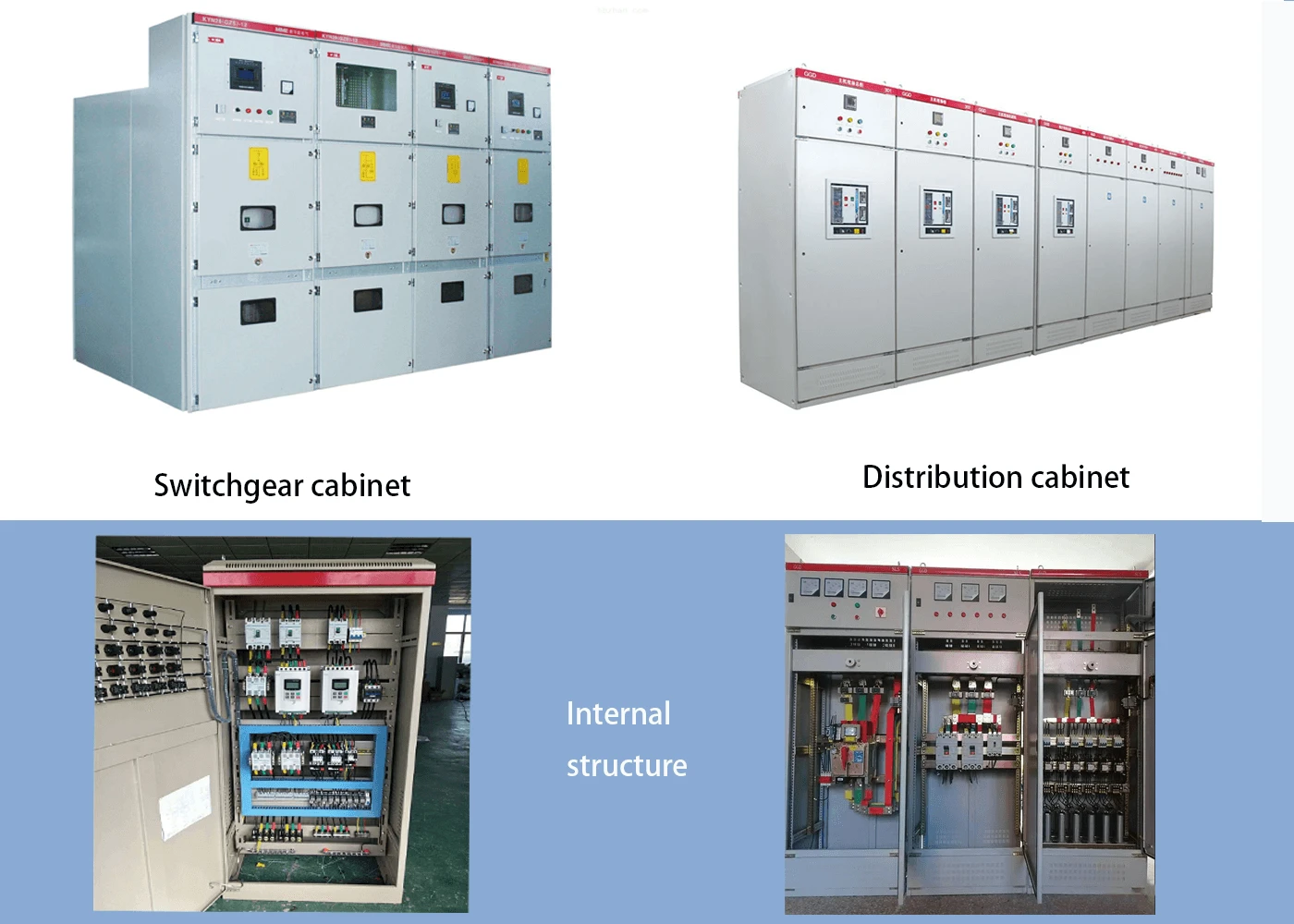
Application Scenarios:Switchgear cabinets are applied to core nodes of power systems, such as main transformer incoming lines in substations and main power intake of large factories.Distribution cabinets are used for terminal power supply, including workshop power cabinets, floor distribution rooms, household distribution boxes, etc.
Common Confusing Points
In daily usage, the term "distribution cabinet" serves as a general name for all power distribution enclosures.From a professional industry perspective, high voltage assembled electrical equipment is collectively referred to as switchgear, while low voltage terminal power distribution equipment is defined as distribution cabinets.In certain low voltage applications, outgoing and feeder cabinets are also commonly categorized as distribution cabinets, since they essentially fall within the scope of low voltage power distribution.
One-sentence Summary
Switchgear cabinets are responsible for circuit control and system safety, while distribution cabinets serve for power distribution and terminal power supply.