




How to Choose Medium Voltage Cable Termination Kits
 Nov 14, 2026|
How to Choose Medium Voltage Cable Termination Kits: A Complete Buyer's Guide
Medium voltage cable termination kits are essential components in electrical power distribution systems. They provide the connection between medium voltage cables and electrical equipment such as transformers, switchgear, ring main units (RMUs), and other power distribution devices.Choosing the correct medium voltage cable termination kit is important for electrical safety, insulation performance, and long-term system reliability. However, selecting the right product involves more than simply matching the voltage rating. Cable construction, insulation diameter, conductor size, installation environment, and applicable technical standards must also be considered.For importers, distributors, EPC contractors, and electrical equipment buyers, understanding these factors can help reduce procurement risks and ensure that the selected products meet project requirements.In this guide, we explain the key factors to consider when selecting medium voltage cable termination kits.
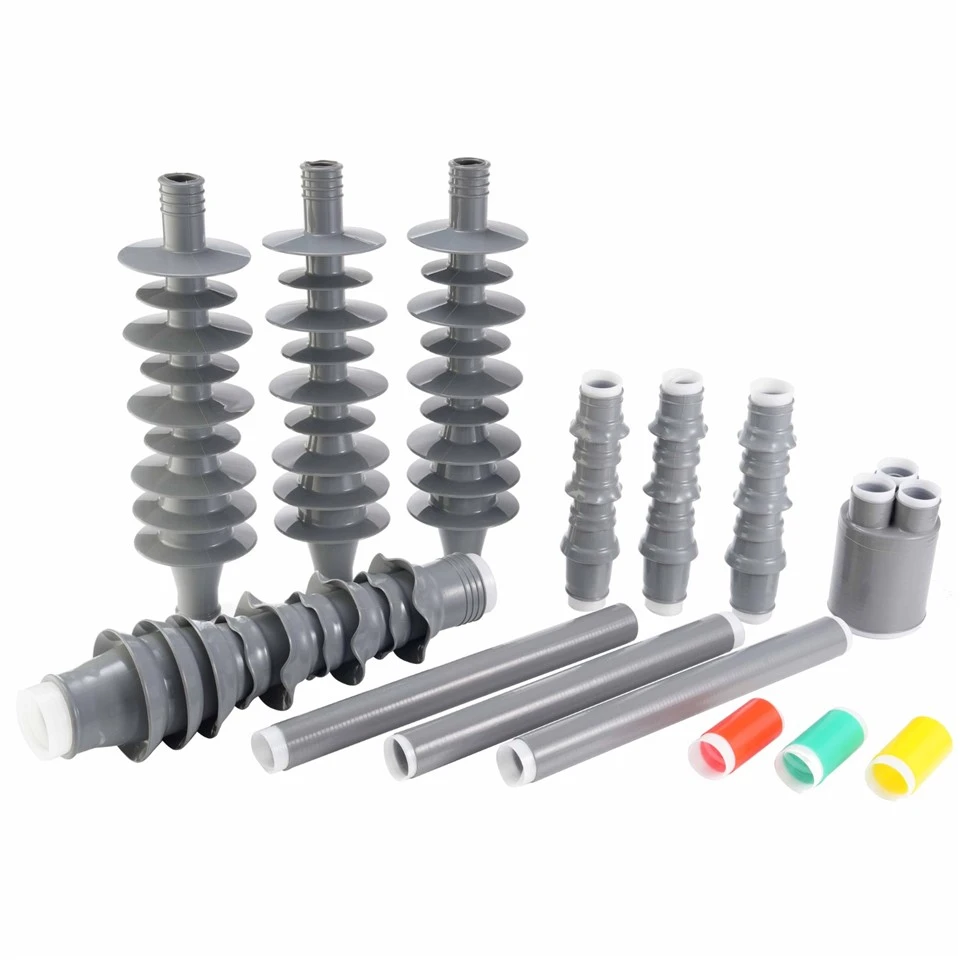
Medium voltage cold shrink cable termination kits for power distribution systems
1. What Is a Medium Voltage Cable Termination Kit?
A medium voltage cable termination kit is a complete set of components designed to terminate medium voltage power cables and provide a reliable electrical connection to equipment or other electrical systems.A properly designed termination manages the electric field around the end of the cable insulation, provides insulation and environmental protection, and supports the connection between the cable conductor and the electrical equipment.Depending on the product design and application, a cable termination kit may include:
- Stress control components
- Insulating tubes or pre-molded insulating bodies
- Outer protective components
- Sealing materials
- Weatherproofing components
- Cable lugs or other connection accessories, depending on the kit configuration
Medium voltage cable terminations are commonly used in:
- Power distribution networks
- Transformer substations
- Industrial electrical systems
- Commercial buildings
- Renewable energy projects
- Underground cable networks
- Switchgear and RMU connections
The specific kit configuration depends on the cable type, voltage class, installation environment, and equipment connection requirements.
2. Determine the Cable Voltage Rating
The first step in selecting a medium voltage cable termination kit is to confirm the cable's rated voltage.Cable accessories must be designed and tested for the intended electrical application. A termination kit with an unsuitable voltage rating should not be selected simply because its physical dimensions appear compatible.Common medium voltage cable voltage classes include:
These are examples of commonly encountered cable voltage classes. Actual system voltage, maximum equipment voltage (Um), local standards, and project specifications must be checked before selecting an accessory.
Important: Always confirm the cable's complete voltage designation, such as 8.7/15kV or 18/30kV, rather than relying only on a general description like "10kV cable" or "35kV cable."
The termination kit must be compatible with the actual cable system and its specified operating conditions.
3. Check the Cable Type and Construction
Different medium voltage cables have different constructions. A termination kit must be compatible with the cable design for which it is intended.Before purchasing, confirm the following cable information:
3.1 Conductor Material
Medium voltage cables commonly use copper or aluminum conductors.The conductor material affects the selection of cable lugs and connection components. Buyers should confirm whether the cable uses:
- Copper conductor
- Aluminum conductor
The connection method and compatible lug design should be checked with the termination kit supplier.
3.2 Cable Insulation Material
Common medium voltage cable insulation materials include:
- XLPE (Cross-Linked Polyethylene)
- EPR (Ethylene Propylene Rubber)
The insulation material and its dimensions should be confirmed because they affect the compatibility of the termination components and installation procedure.
3.3 Single-Core or Three-Core Cable
Medium voltage power cables may be single-core or three-core.The termination design and required components can differ depending on the number of cores and cable construction.When requesting a quotation, specify whether the application involves:
- Single-core cable
- Three-core cable
Also provide the cable construction drawing or datasheet when available.
3.4 Cable Screen and Metallic Shield
Medium voltage cables may have copper wire screens, copper tape screens, or other metallic shielding structures.The termination kit must be suitable for the cable's screen design and earthing arrangement.Buyers should provide information about the metallic screen and grounding requirements so that the supplier can confirm the appropriate product configuration.
4. Measure the Cable Dimensions Correctly
One of the most important factors in selecting a medium voltage cable termination kit is cable dimensional compatibility.A kit may have the correct voltage rating but still be unsuitable if its components do not match the actual cable dimensions.The following measurements are particularly important:
Do not select a cable termination kit based only on conductor cross-section.
For example, two cables may both have a 240mm² conductor, but their insulation diameters and overall constructions may differ.The termination kit must be selected according to the manufacturer's specified application range and the actual cable dimensions.For distributors and importers, collecting accurate cable measurements from customers before placing an order can significantly reduce product compatibility issues.
5. Choose Between Indoor and Outdoor Cable Terminations
The installation environment is another important selection factor.Medium voltage cable terminations are generally designed for indoor or outdoor applications. Although some product designs may cover more than one application, buyers should always confirm the manufacturer's stated application range.
5.1 Indoor Cable Termination

Indoor type cold shrink cable termination for switchgear and cable pits
Indoor cable terminations are used inside buildings, substations, switchgear rooms, transformer rooms, and other protected electrical environments.Typical applications include:
- Indoor switchgear
- Ring main units
- Transformer connections
- Industrial distribution panels
- Indoor substations
Indoor termination designs are intended for installation in environments where direct exposure to rain, sunlight, and outdoor weather conditions is limited.
Suggested ALT: Medium voltage indoor cable termination kit for power distribution systems
5.2 Outdoor Cable Termination
Outdoor cable terminations are designed for installation in exposed environments.They may be used in:
- Outdoor substations
- Pole-mounted electrical equipment
- Outdoor transformers
- Power distribution networks
- External cable connections
Outdoor terminations generally require suitable external insulation and weather-resistant design features. Depending on the application, sheds or other protective structures may be used to support insulation performance under outdoor conditions.When selecting an outdoor termination, consider:
- Environmental pollution level
- Humidity and rainfall
- UV exposure
- Ambient temperature
- Installation altitude
- Required creepage distance
- Applicable project specifications
Suggested ALT: Outdoor medium voltage cable termination kit with weather-resistant insulation

Outdoor cold shrink cable termination with UV and rain resistant silicone sheds
6. Select the Appropriate Installation Technology
Medium voltage cable termination kits are available in different designs, including heat shrink, cold shrink, and pre-molded solutions.The choice depends on the project requirements, installation conditions, product design, and technical specifications.
6.1 Heat Shrink Cable Termination
Heat shrink cable terminations use heat-shrinkable components that contract when heated during installation.Typical features include:
- Compact component structure
- Flexible product configurations
- Different voltage and cable size options
- Installation using an appropriate heat source
- Applications in indoor and outdoor cable systems, depending on the product design
Heat shrink products are commonly used in power distribution and industrial electrical installations.
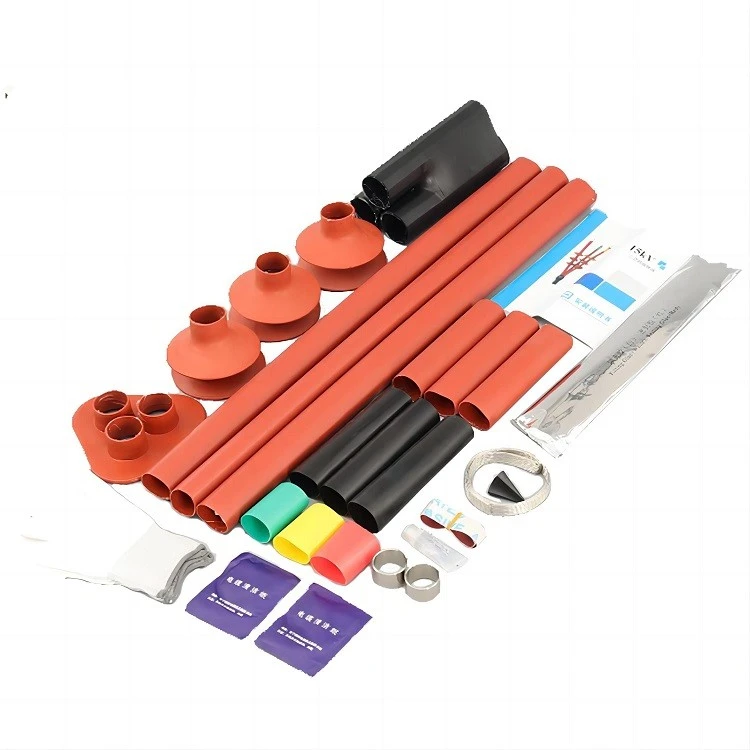
Outdoor heat shrink cable termination kit with weatherproof insulation
6.2 Cold Shrink Cable Termination
Cold shrink cable terminations use pre-expanded elastomeric components installed over the prepared cable.After the supporting core is removed, the components contract around the cable.Typical features include:
- No external heating required for shrinkage
- Installation without a heat source
- Elastic recovery around the cable
- Convenient installation in locations where open-flame heating is undesirable
- Silicone rubber or other elastomeric materials, depending on product design
Cold shrink products are often considered for projects where installation convenience and controlled cable preparation are important.
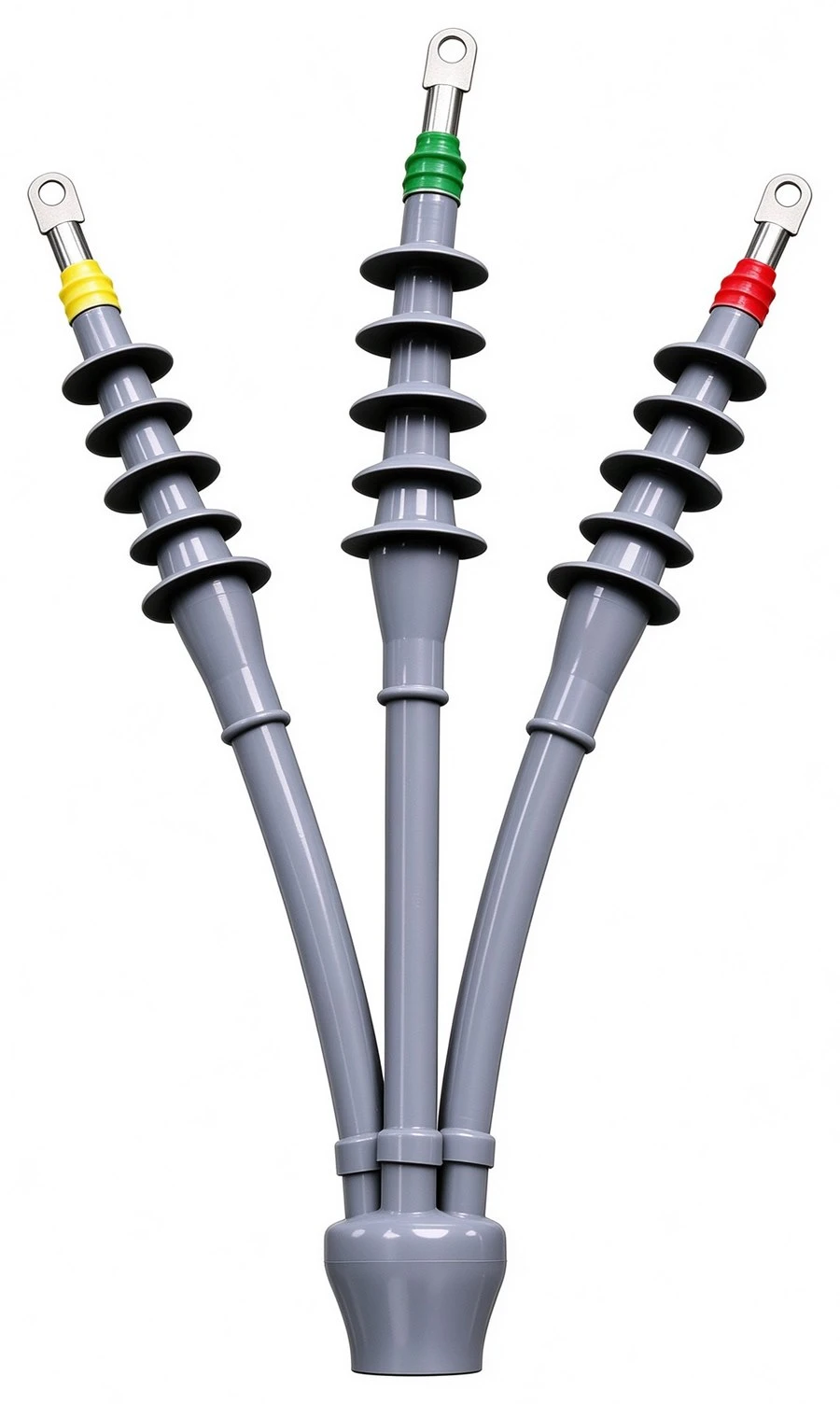
Three-core cold shrink cable termination kit for 11kV and 33kV XLPE cables
6.3 Which Technology Should You Choose?
There is no universal answer. The correct choice depends on the project environment, installation procedures, product specifications, and buyer requirements.
To learn more about the differences, read our guide:
Heat Shrink vs Cold Shrink Cable Accessories: Key Differences and How to Choose
[Link this text to:https://www.chnjn-electric.com/heat-shrink-vs-cold-shrink-cable-accessories/]
7. Check Applicable Standards and Testing Requirements
For medium voltage cable accessories, technical standards and test documentation are important parts of supplier evaluation.
One relevant international standard is IEC 60502-4:2023.
This standard specifies type-test requirements for accessories used with extruded-insulation power cables rated from 3.6/6 (7.2) kV up to 18/30 (36) kV, subject to the scope and cable-standard conditions specified in the document.It is important to understand that IEC 60502-4 does not automatically cover every cable accessory application. Special applications may require additional specifications or other relevant standards.When evaluating a cable termination supplier, ask for:
- Applicable product standards
- Type-test reports, where required
- Product technical datasheets
- Installation instructions
- Material specifications
- Dimensional drawings
- Quality inspection documentation
Do not assume that a product complies with a particular standard simply because the supplier mentions the standard in general marketing materials. Request the relevant documentation and verify that it applies to the specific product design and voltage class being purchased.
8. Consider the Installation Environment and Operating Conditions
The operating environment can have a significant influence on cable accessory selection.Before confirming an order, consider the following conditions:
Ambient temperature: The product should be suitable for the expected installation and operating temperature range.
Humidity and moisture: Sealing and insulation design should be appropriate for the environmental conditions.
Pollution level: Outdoor applications in industrial, coastal, or heavily polluted environments may require specific insulation and creepage-distance considerations.
UV exposure: Outdoor products should have suitable resistance to sunlight and environmental exposure.
Installation space: The dimensions of the switchgear, transformer terminal box, or cable compartment may affect the termination configuration.
Installation conditions: Consider whether the installation area allows heating equipment to be used safely or whether a cold shrink design is more suitable.
Always compare these conditions with the manufacturer's technical specifications before purchasing.
9. Common Mistakes When Purchasing Medium Voltage Cable Termination Kits
For overseas buyers, selecting a suitable product is only part of the procurement process. Accurate technical communication with the supplier is equally important.Here are several common mistakes to avoid.
Mistake 1: Selecting Only by Voltage Rating
A 10kV termination kit is not necessarily suitable for every 10kV cable.Cable construction, insulation diameter, and accessory application range must also match.
Mistake 2: Ignoring the Cable Insulation Diameter
Conductor cross-section alone does not provide enough information for accurate product selection.Always provide the insulation diameter and cable datasheet when possible.
Mistake 3: Confusing Indoor and Outdoor Products
Indoor and outdoor termination kits may have different designs and environmental protection requirements.Confirm the actual installation location before ordering.
Mistake 4: Not Checking the Kit Configuration
Different suppliers may provide different component configurations.Confirm exactly what is included in the kit, including stress control components, insulation components, sealing materials, and connection accessories where applicable.
Mistake 5: Not Requesting Technical Documentation
Without datasheets, installation instructions, and relevant test documentation, it can be difficult to verify whether the product is suitable for the intended project.A professional supplier should be able to provide clear product information for technical evaluation.
10. What Information Should You Provide When Requesting a Quotation?
To help suppliers recommend the correct medium voltage cable termination kit, buyers should prepare complete technical information before requesting a quotation.Use the following checklist:
Providing this information allows the supplier to check compatibility more accurately and recommend an appropriate product configuration.For large projects, it is also helpful to provide the cable manufacturer's datasheet, cable cross-section drawing, and equipment connection details.
11. Why Choose Jinneng for Medium Voltage Cable Accessories?
Jinneng Power Technology (Hubei) Co., Ltd. focuses on the development and manufacturing of power cable accessories and related electrical products.For overseas importers, distributors, and project procurement teams, choosing a supplier with relevant product experience and clear technical documentation is an important part of the purchasing process.Jinneng's power cable accessories portfolio includes products such as:
- Heat shrink cable terminations
- Cold shrink cable terminations
- Heat shrink cable joints
- Cold shrink cable joints
- Cable connectors
- Other power cable accessory products
Our product range covers different cable accessory applications and voltage classes. The available specifications and configurations should be confirmed against the requirements of each project.Explore our product categories:
If you are sourcing medium voltage cable termination kits for distribution networks, industrial projects, or electrical equipment applications, our team can help review your technical requirements and identify suitable product options.Contact Jinneng to discuss your cable voltage rating, dimensions, application environment, and procurement requirements.
12. Frequently Asked Questions (FAQ)
Q1: What is a medium voltage cable termination kit?
A medium voltage cable termination kit is a set of components used to terminate medium voltage power cables and connect them to electrical equipment. It provides insulation, stress control, and environmental protection according to the product design.
Q2: How do I choose the correct medium voltage cable termination kit?
Start by confirming the cable voltage rating, conductor material, conductor cross-section, insulation diameter, cable construction, and installation environment. Then check the product's specified application range and relevant technical documentation.
Q3: What is the difference between indoor and outdoor cable terminations?
Indoor cable terminations are designed for protected indoor environments, while outdoor cable terminations are designed for exposed conditions and may include additional weather-resistant insulation features.
Q4: Can one cable termination kit fit different cable sizes?
Some products are designed for a defined range of cable dimensions, while others are intended for specific cable sizes. Always check the manufacturer's declared application range and relevant qualification documentation.
Q5: Are heat shrink or cold shrink cable terminations better for medium voltage applications?
Neither technology is universally better. Heat shrink and cold shrink products have different installation methods and material designs. The choice should be based on cable compatibility, installation conditions, project specifications, and verified product performance.
Q6: What information is needed to order a 10kV cable termination kit?
You should provide the complete cable voltage designation, conductor material, conductor cross-section, number of cores, insulation diameter, cable outer diameter, and whether the installation is indoor or outdoor.
Q7: Which standard applies to medium voltage cable accessories?
IEC 60502-4:2023 is an important reference for type-test requirements for certain accessories used with extruded-insulation power cables rated from 3.6/6 (7.2) kV up to 18/30 (36) kV. The applicable standard should always be checked against the actual cable system and project requirements.
Q8: What should importers and distributors check before purchasing?
Importers and distributors should check product specifications, application range, technical documentation, installation instructions, quality inspection records, packaging requirements, and supplier communication capabilities.
Conclusion
Choosing the right medium voltage cable termination kit requires careful consideration of several technical factors.Voltage rating is only the starting point. Cable construction, conductor material, insulation diameter, indoor or outdoor installation, environmental conditions, and applicable testing requirements all play important roles in product selection.For importers, distributors, and electrical project buyers, providing complete cable information to the supplier is one of the most effective ways to reduce selection errors and improve procurement efficiency.Jinneng provides a range of heat shrink and cold shrink power cable accessories for different electrical distribution applications.
Looking for a reliable medium voltage cable termination kit supplier? Contact us to discuss your project requirements and request product information.
Contact information:
Sales manager: Mr. Mark Xu
Email: export4@chnjn.com
Mobile: +86-18007297104