




Industry knowledge
-

 2026-5-21
Understanding Different Phase and Wire Systems
When you switch on a household light or start heavy industrial machinery, the power system is working silently behind the scenes. But have you ever wondered why residential electricity differs from in -
 2026-5-13
Basic Knowledge of Reactors
As an essential component in power systems, reactors perform multiple functions such as voltage regulation, short-circuit current limitation, harmonic suppression, and reactive power compensation. The -
 2026-5-12
A Complete Guide to Testing Capacitor Quality
Capacitors are essential electronic components widely used in power supplies, switching circuits, communication equipment, and industrial control systems. Accurately testing capacitor quality is impor -
 2026-5-11
What effect does thermal stability have on power factor correction capacitors?
Through the IEC standard thermal stability test, continuous full-load operation was conducted at the high environmental temperature, with extremely low temperature rise and a stable temperature curve, -
 2026-5-05
Detailed Basics About Capacitors
1.Definition A capacitor is an electrical component used to store and release energy in an electric field. When a voltage is applied across its terminals, an electric field is established between the -
 2026-5-05
Detailed Basics of High Voltage Switchgear II
( I ) Three Positions of Switchgear Trolley Working Position In this position, the circuit breaker is fully connected to the primary system. When closed, it conducts power to the outgoing lines under -
 2026-4-29
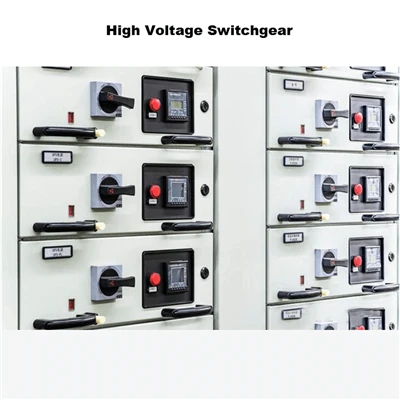
Detailed Basics of High Voltage Switchgear
High-voltage switchgears are familiar to most electrical professionals. High-voltage switchgears are mainly applied to power grids with a voltage above 1 kilovolt.It guarantees stable circuit operatio -
 2026-4-28
Differences and Significance of Terminal-to-Case Withstand Voltage: 3/8kV vs....
✅ 3/8kV is the “passing line” for ordinary indoor capacitors. ✅ 6/15kV is the “safety ceiling” for power grid / airport‑grade capacitors. ✅ 6/15kV represents doubled insulation strength, doubled saf -
 2026-4-28
Three Fundamental Parameters-Resistance, Inductance and Capacitance
Resistors (R), inductors (L) and capacitors (C) are the three primary components and core parameters in all circuits. No electric circuit can operate without at least one of them.It is worth noting th -
 2026-4-21
CT(Current Transformer)versus PT(Potential Transformer)
Although both current transformers (CT) and voltage transformers (PT/VT) are classified as transformers, their functions and application scenarios differ significantly. In this issue, we will start wi -
 2026-4-21
Interrelationship between power factor and reactive power compensation
Have you ever run into this puzzling problem? You installed additional compensation capacitors to improve power quality - yet your electricity costs went up, not down.What is the hidden technical caus -
 2026-4-16
Differences Between Switchgear Cabinet and Distribution Cabinet
The core difference between switchgear cabinets and distribution cabinets lies in their functional positioning and voltage levels .Switchgear cabinets serve as hubs for control and protection , focusi